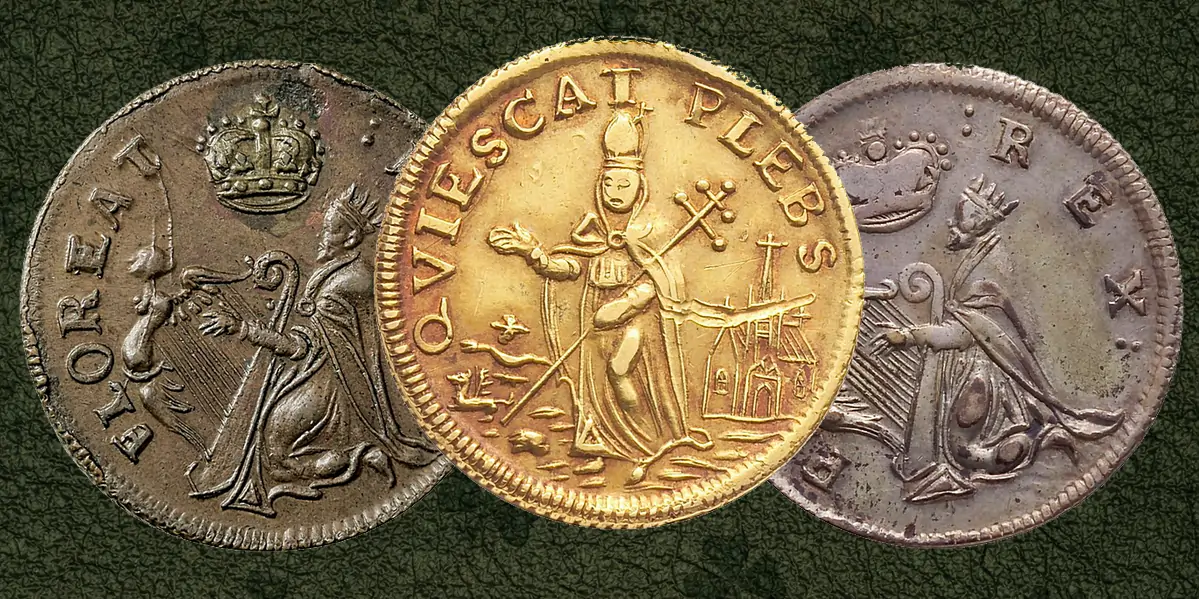
In the early days of America, long before the U.S. dollar existed, the colonies faced a serious problem—there simply wasn’t enough money in circulation. Trade was growing, populations were expanding, and yet coins were scarce. This shortage forced colonists to get creative, and surprisingly, one solution came from across the Atlantic: an Irish coin.
The Colonial Money Crisis
During the 17th and 18th centuries, the American colonies struggled with a lack of official currency. British coins were in short supply because England preferred to keep precious metals within its own economy. As a result, colonists often relied on barter systems, foreign coins, or even commodities like tobacco to conduct everyday transactions.
This created confusion and inconsistency in trade, making it difficult for the colonial economy to function smoothly.
Enter the Irish Coin
To help address the shortage, large quantities of Irish copper coins—commonly known as Hibernia coins—began circulating in the American colonies. These coins were originally minted in Ireland and featured the figure of Hibernia, a symbolic representation of Ireland.
Although they were not officially issued for use in America, they quickly became widely accepted due to necessity. Colonists needed any reliable medium of exchange, and these coins filled that gap.
Why These Coins Were Important
The introduction of Irish coins helped stabilize everyday transactions in several ways:

- They provided a consistent and recognizable form of currency
- Made small purchases and local trade easier
- Reduced reliance on barter systems
- Helped standardize pricing across regions
Even though the coins were made of copper and not considered highly valuable, their availability made them incredibly useful for daily commerce.
Not Official, But Widely Used
Interestingly, these Irish coins were never officially approved by British authorities for use in the colonies. However, due to the ongoing money shortage, colonists embraced them anyway.
This informal acceptance highlights how economic necessity often drives innovation. People were willing to use whatever currency was available, regardless of its origin, as long as it worked.
A Step Toward Financial Independence
The widespread use of foreign coins like the Irish Hibernia pieces also exposed a deeper issue—the colonies’ dependence on external sources for money. Over time, this contributed to a growing desire for economic independence.
Eventually, the colonies began experimenting with their own paper currency and later developed a unified monetary system after independence.

Legacy of the Irish Coin
Today, Hibernia coins are considered valuable historical artifacts. They serve as a reminder of a time when early Americans had to adapt creatively to financial challenges.
More importantly, they highlight how something as simple as a small copper coin played a role in shaping the economic foundations of what would become the United States.
Final Thoughts
The story of the Irish coin in colonial America is a fascinating example of how global connections influenced early economies. In a time of scarcity, these coins provided a practical solution that helped keep trade moving and communities functioning.