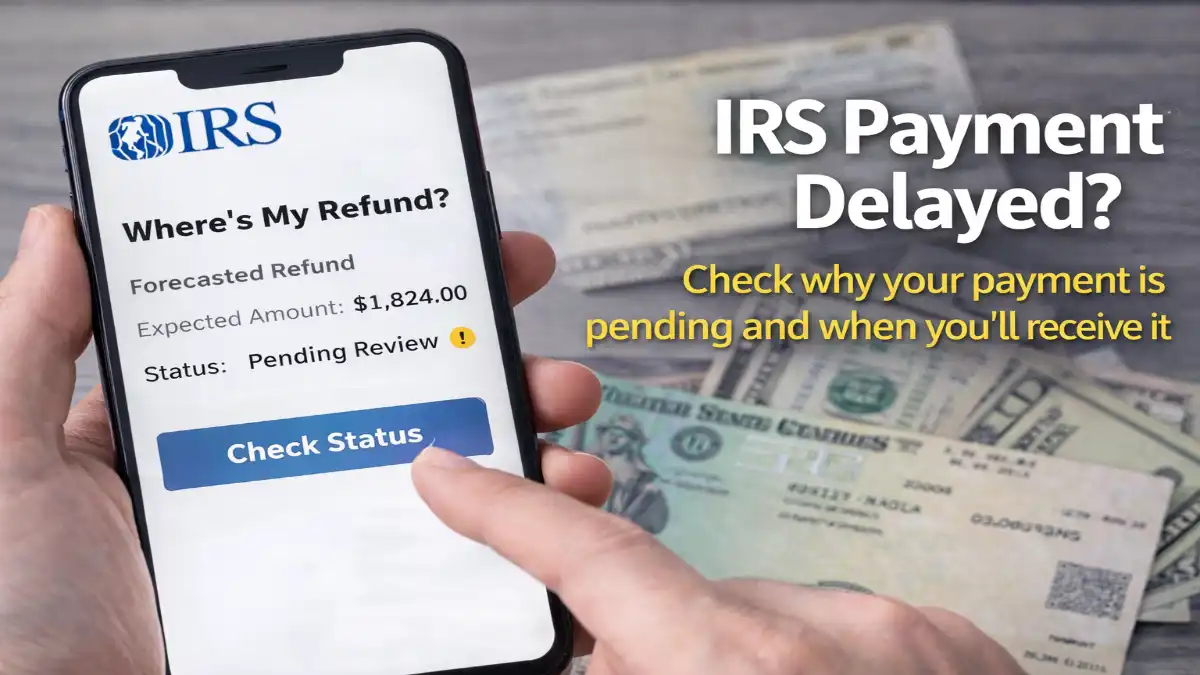
If you’re still waiting for your IRS payment, you’re not alone. Many taxpayers experience delays due to various reasons such as processing issues, incorrect details, or verification checks. The good news is that you can easily track your payment status and understand why it’s delayed.
Why Is Your IRS Payment Delayed
There are several common reasons why your IRS payment may be pending
Incorrect bank details or mailing address
Errors in tax return information
Identity verification required
High volume of tax filings causing delays
Paper return instead of e-filing
Refund adjustments or additional review
Even small mistakes can slow down the processing time.
How to Check Your IRS Payment Status
You can check your payment status using official IRS tools. Follow these steps
Visit the IRS payment or refund status tool
Enter your Social Security Number or ITIN
Provide your filing status
Enter the exact refund amount
After submitting these details, you will see your payment status on the screen.

What Your Payment Status Means
While checking your status, you may see different messages
Return Received – Your return is being processed
Refund Approved – Your refund is approved and will be sent soon
Refund Sent – Your payment has been issued
Understanding these statuses helps you know where your payment stands.
How Long Does It Take to Receive Payment
The timeline depends on how you filed your return
E-filed returns: Usually within 21 days
Paper returns: Can take 4 to 8 weeks or more
Direct deposit: Faster than mailed checks
Delays may occur during peak tax season.
What to Do If Your Payment Is Taking Too Long
If your payment is delayed beyond the expected time, you should
Double-check your entered details
Verify your bank account information
Look for any IRS notices or emails
Wait for the standard processing time before taking action
If needed, you can contact IRS support for further assistance.
Common Mistakes to Avoid
To prevent delays in the future, make sure to
File your return accurately
Use e-filing instead of paper filing
Choose direct deposit for faster payments
Keep your personal and bank details updated
Final Thoughts
An IRS payment delay can be frustrating, but in most cases, it’s due to simple issues that can be resolved. By checking your payment status and ensuring all details are correct, you can stay informed and avoid unnecessary stress.